Pricing and documentation checked on October 7, 2026. Prices are public Salesforce list prices in USD. The calculation below is an illustrative scenario, not a project quote.
“How much will Agentforce cost us?”
Before opening a calculator, I would ask what the agent is supposed to finish. Answering a question about your return policy and actually processing a return sound similar in a project brief. They lead to very different work.
One needs reliable knowledge. The other may need customer verification, order data, eligibility rules, and an integration that can change something in another system. Both need testing and someone responsible after launch.
That is where an estimate starts to become useful: a defined job, a list of dependencies, and measurements from a pilot.
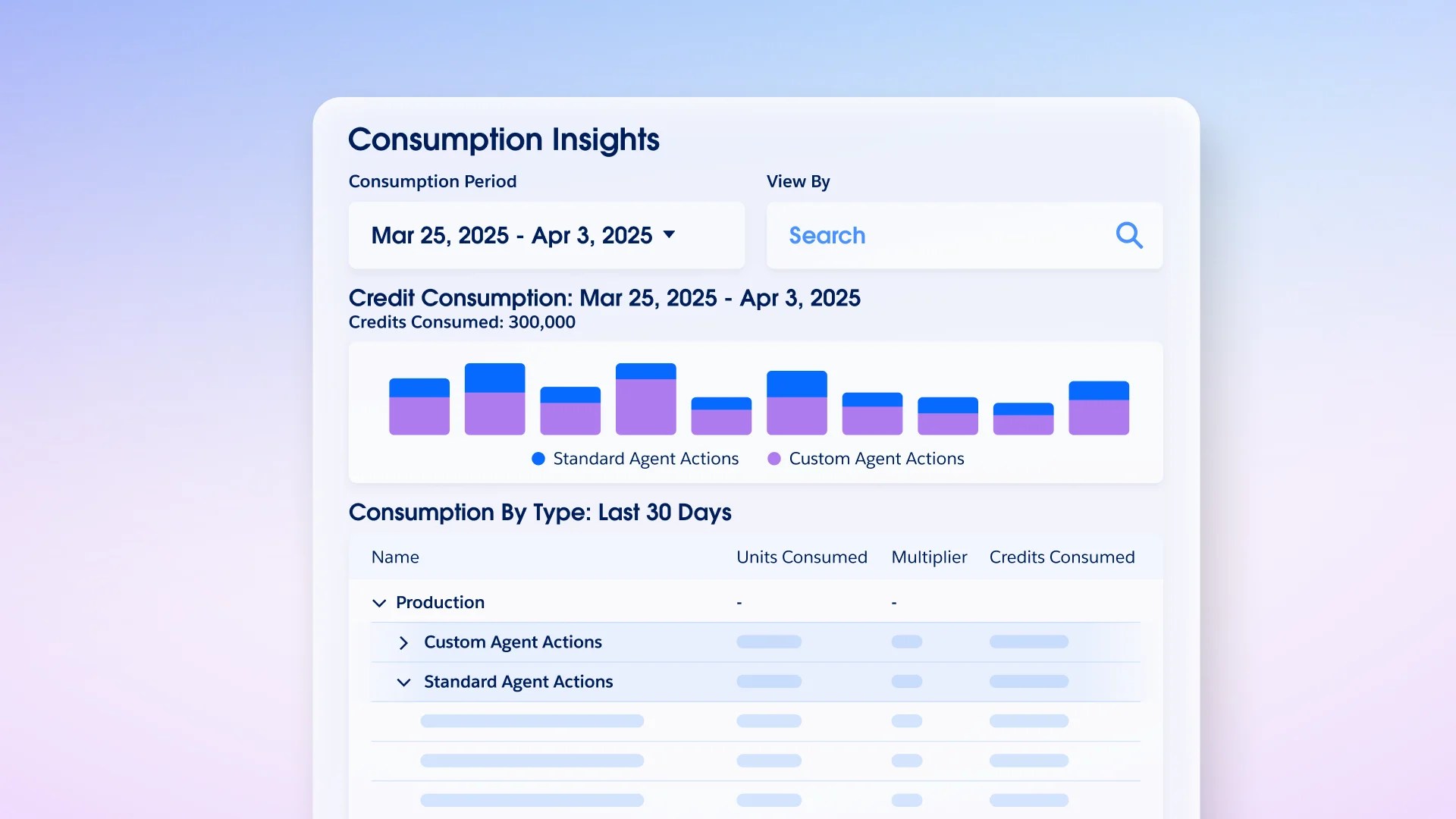
Start by identifying what you are buying. Agentforce has several commercial models. These are some of the options in Salesforce’s public pricing page:
| Model | Public list price | What is being purchased |
|---|---|---|
| Flex Credits | $500 per 100,000 credits | Metered consumption; a text agent action uses 20 credits |
| Conversations | $2 per conversation | A conversation-based option for customer-facing agents |
| Agentforce User License | $5 per user per month | Employee access; Flex Credits are required separately |
| Selected employee Agentforce add-ons | $125 per user per month | Usage covered by the applicable unmetered terms |
| Help Agent Resolutions | $2 per resolution | A result defined by Help Agent billing rules |
These are different offers with different scopes, not five charges to add together. Existing entitlements and the actual contract matter. Source 1
The word unmetered deserves particular attention. Salesforce documents conditions involving permissions and execution identity. Other services, including Data 360, can still consume credits when AI usage is unmetered. A license assigned somewhere in the org does not automatically make every background process or AI operation unmetered. Source 2
Before choosing an offer, establish who invokes the agent, how it runs, and which services it calls.
Consider those two return scenarios. This is an illustrative scope comparison, not a claim about a particular customer’s implementation:
Explain the policy
“Can I return this?”
Find the relevant policy, explain the conditions, and recognize when a person needs to help.
Complete the process
“Please arrange my return.”
Identify the customer, retrieve the order, check eligibility, register the return, and handle a failed integration.
The second scope introduces more decisions and failure paths. Each one needs an owner and a definition of correct behavior.
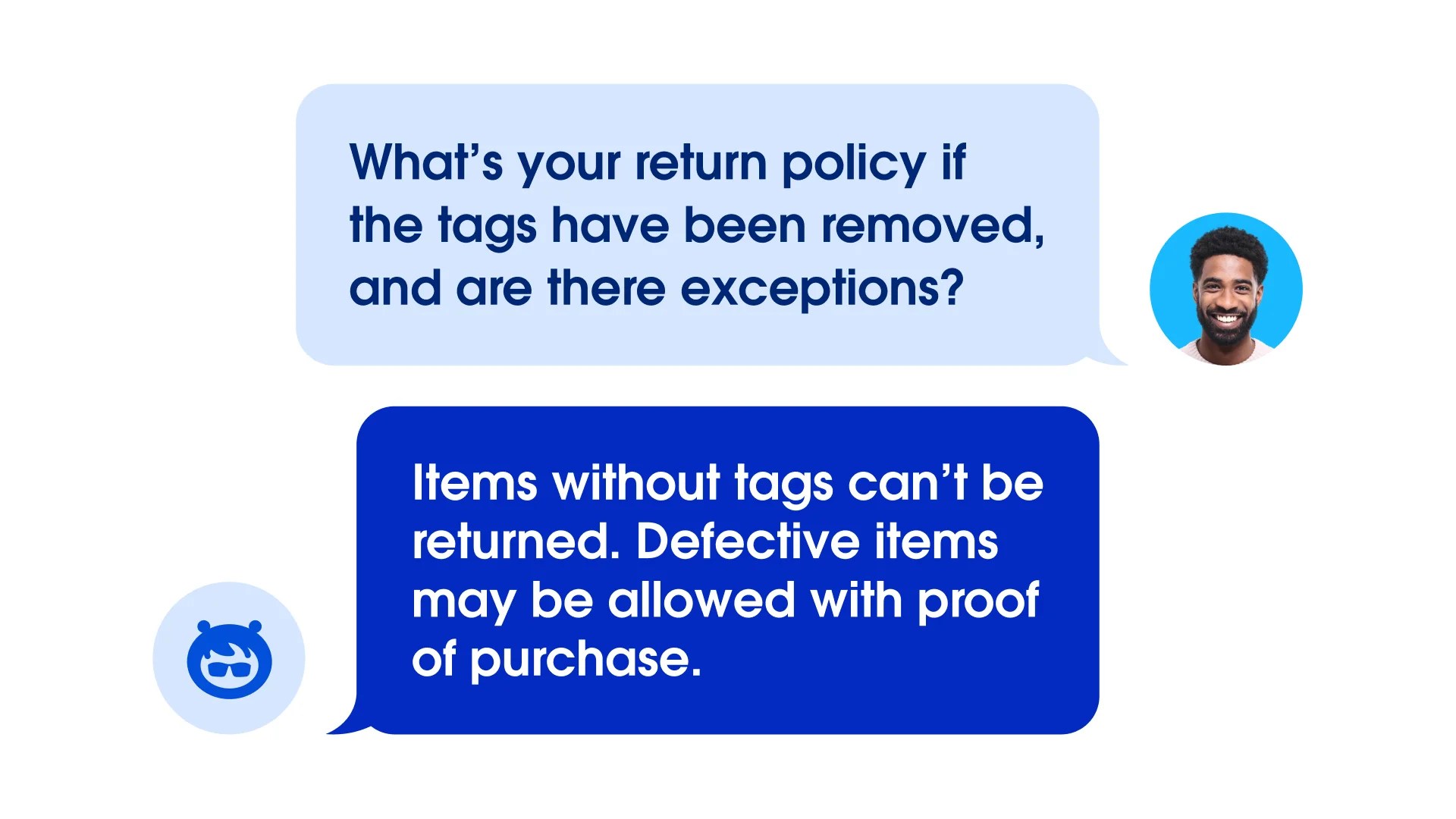
Salesforce’s planning guidance asks teams to map process steps, required data, business rules, confirmation points, and escalation conditions. These are useful inputs to a scope of work: they describe what the agent must be able to handle before it is ready for users. Source 3
Integrations change that scope substantially. An existing, tested order API gives you a different starting point from a process that depends on a person reading a spreadsheet. Salesforce’s implementation examples include authenticated external services, Flow or Apex logic, and routing conversations to human representatives. Source 4
Some of the “AI budget” may therefore pay for integration work the business has needed for years. I would price that work separately, so the estimate shows what the agent requires and what the wider business can reuse.
Data can cost you before the first conversation. Two documents disagree about return eligibility. A knowledge article refers to last year’s terms. Nobody is sure which customers may see an internal procedure. Resolving these issues takes time from people who own the process.
That work belongs in the estimate even when an internal team does it.
There is also a technical bill. The Agentforce Data Library documentation describes charges associated with document processing, search indexing, queries, and storage exceeding the allocation. The applicable billing can use Data Services Credits or Flex Credits depending on the contract; those are not automatically two charges for the same operation. Source 5
Salesforce also distinguishes enabling Data 360, formerly Data Cloud, from implementing it with connected sources, mapped models, and additional data capabilities. Those are different levels of work. The required scope should follow the agent’s use case. Source 6
I would start with the information this agent needs and how fresh it must be. That gives the data work a boundary.
In the Flex model, measure the actions behind the interaction. An action is a function the agent invokes to retrieve information or perform a task. A single customer message can require several actions. Some internal steps, such as setting variables or escalating to a representative, are not billed as agent actions. Source 7
At $500 per 100,000 credits and 20 credits per text action, the list-price arithmetic gives $0.10 per action. Source 1
Consider 10,000 cases a month. Change only the assumed average number of billable text actions:
The case volume and action counts are assumptions chosen for this example. The calculation excludes implementation, data services, additional licenses, and maintenance. It also assumes the stated list rate, with no included credits or discounts applied.
The same case volume produces a $5,000 difference in this example. A pilot should record actual action counts across representative cases, including difficult paths and repeated attempts.
Do not apply that calculation to every commercial model. For Help Agent’s resolution-based offer, agent actions and Data 360 queries in a resolved interaction are included rather than charged separately. A billable resolution has defined conditions, so it should not automatically be treated as identical to your own measure of customer-service success. Source 7
Go-live starts the operating budget. Someone still needs to review failures, update knowledge, adjust instructions, and check that a change has not broken another scenario. Salesforce provides observability tools for monitoring agents, investigating sessions, and improving their performance. Source 8
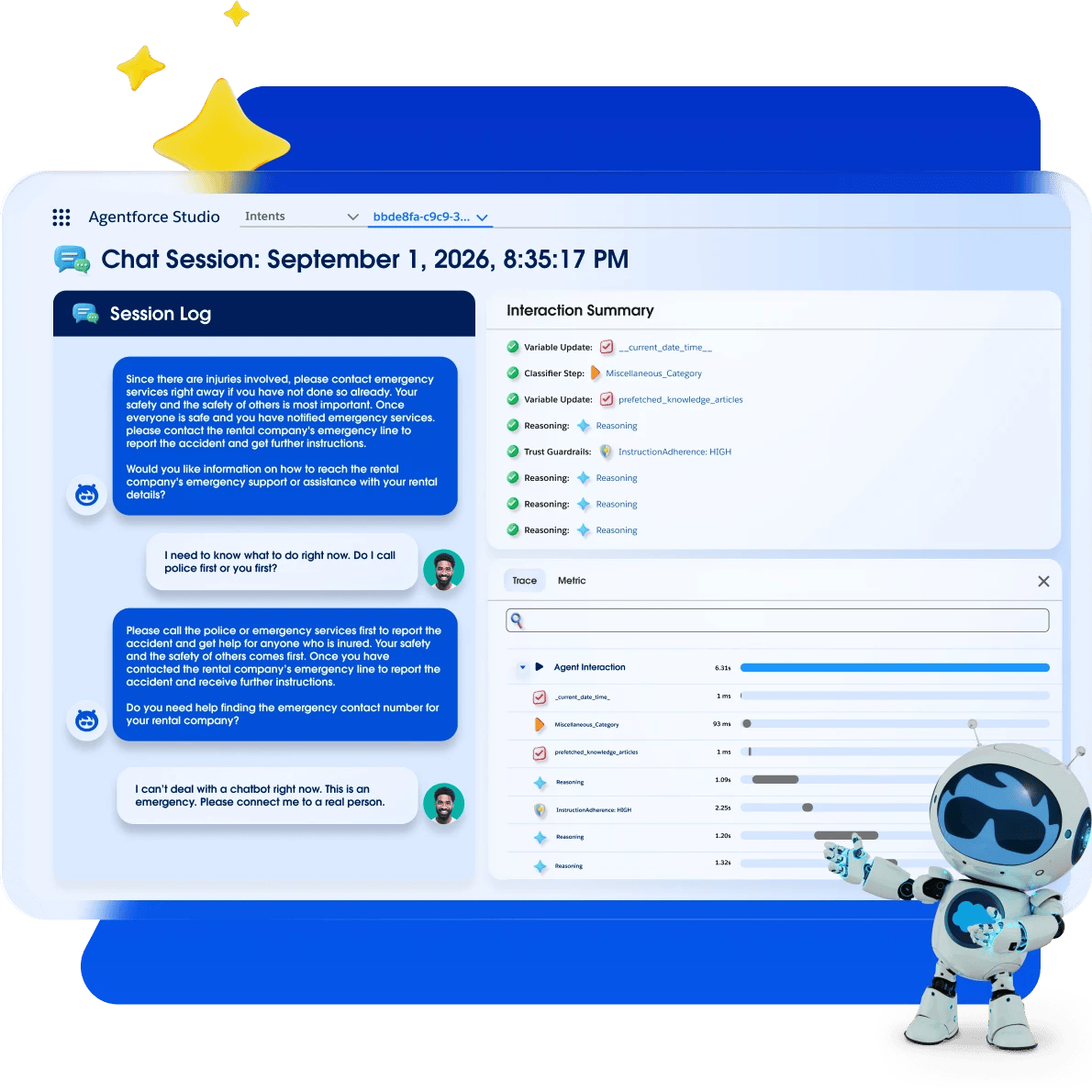
Someone has to act on these findings. I would allocate time for maintenance, business review, and regression testing from the beginning.
Testing costs also need current documentation. Since Summer ’26, Salesforce says Agentforce Testing Center testing does not consume Einstein Requests or Flex Credits. Data 360 queries from Testing Center remain metered. This is a rule for that testing tool, not a statement that all development activity or the team’s testing work is free. Source 9
The purchasing commitment matters too. Salesforce states that unused Flex Credits do not roll over into subsequent subscription terms. Buying more capacity than you use can therefore affect the economics of the project. Source 1
The number I would take to a budget review is cost per successfully completed case.
If the customer comes back and a representative repeats the entire process, that additional work belongs in the evaluation.
In a pilot, I would track four things together:
- Usage: billable actions and other metered services.
- Completion: whether the customer’s task was correctly finished.
- Follow-up: escalations, repeat contacts, and corrections.
- Human effort: time still needed to finish or supervise the work.
Then model several volumes and case mixes. The result is a budget range with assumptions you can inspect.
For the first-year budget, I would include process design, data preparation, integrations, agent configuration, testing, incremental product charges, and ongoing ownership. Existing CRM spending should be shown separately from new spending so that the same license cost is not counted twice.
The question I want a project estimate to answer is concrete: what will it take to give this agent the right information, the right tools, and a reliable way to complete this particular job? Once that is understood and measured, the price list becomes a useful part of a budget.
Sources and verification
All sources below are official Salesforce materials checked on October 7, 2026. Recommendations about budgeting are the author’s analysis. The worked example uses hypothetical volumes and action counts with the published list rate. Pricing pages and product documentation can change; the applicable order form and feature terms determine a customer’s actual entitlements and charges.
- Agentforce Pricing — public prices, purchasing models, action multipliers, and unused-credit terms.
- Metering for Agentforce and Generative AI Usage — unmetered usage conditions and separately metered services.
- Map Business Processes for an Agentforce Project — process planning, required inputs, confirmation points, and escalation.
- Agentic Patterns and Implementation with Agentforce — architecture and implementation examples covering tools, integrations, and human handoff.
- Billing Considerations for Agentforce Data Library — data processing, indexing, query, and storage billing.
- Explore Data 360 and Agentforce — the distinction between enabling and implementing Data 360.
- Flex Credits Billable Usage Types — billable action definitions, utility exceptions, and Help Agent resolution rules.
- Agentforce Observability — monitoring, session analysis, and agent improvement capabilities.
- Considerations for Testing Center — Testing Center billing rules from Summer ’26.
Image credits: All three product illustrations are by Salesforce and are reproduced here for discussion of the depicted features. Original files: Digital Wallet, Knowledge action, and Session tracing. Product illustrations contain demonstration data.


Comments